

Shalom Medical Team
Shalom Hospital
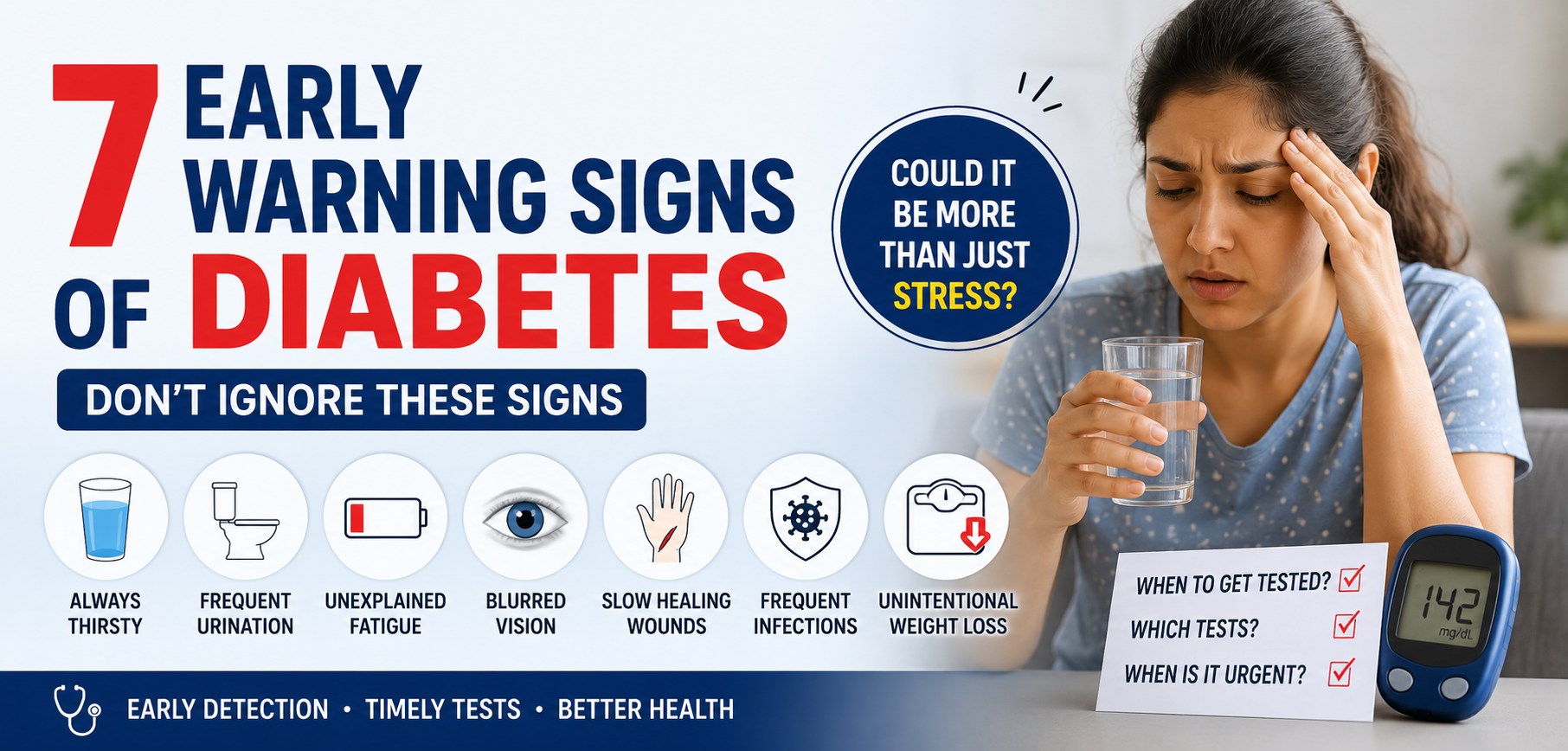
7 Early Warning Signs of Diabetes Most People Ignore
Diabetes does not always announce itself. For many people—especially those developing type 2 diabetes—blood sugar can remain elevated for months or even years before obvious symptoms appear. Some people have no noticeable symptoms at all.
That is why seemingly minor changes such as unusual thirst, frequent urination, persistent tiredness, or blurred vision should not automatically be dismissed as stress, ageing, dehydration, or a busy lifestyle.
Diabetes is diagnosed with blood tests, not symptoms alone. But recognizing potential warning signs can prompt testing early, when lifestyle changes and appropriate treatment can help prevent or delay complications.
Important: Having one or more of these symptoms does not mean you have diabetes. Many other conditions can cause similar symptoms. If symptoms are persistent, recurrent, or occurring together, speak with a healthcare professional and consider appropriate blood glucose testing.
What Is Diabetes?
Diabetes is a chronic condition in which blood glucose (blood sugar) becomes too high.
Normally, the hormone insulin helps glucose move from the bloodstream into cells, where it can be used for energy. In type 2 diabetes, the body becomes less responsive to insulin and, over time, may also produce insufficient insulin to maintain normal blood glucose levels.
Persistently high blood glucose can damage blood vessels and nerves and increase the risk of complications affecting the heart, kidneys, eyes, feet and other organs.
Type 2 diabetes can develop gradually. In fact, symptoms may be mild enough that a person does not recognize anything is wrong until a routine blood test—or sometimes a diabetes-related complication—reveals the problem.
1. You Are Suddenly Thirstier Than Usual
Everyone gets thirsty, particularly after exercise or in hot weather.
The warning sign is persistent or unusually intense thirst that does not seem to have an obvious explanation.
When blood glucose becomes excessively high, the kidneys attempt to remove some of the excess glucose through urine. This increases fluid loss and can contribute to dehydration, which can make you feel increasingly thirsty.
You may notice that you:
- Drink considerably more water than before
- Wake during the night because you are thirsty
- Carry water everywhere because you constantly feel thirsty
- Feel thirsty despite drinking what seems like an adequate amount of fluid
Increased thirst is a recognized symptom of diabetes, particularly when it occurs alongside frequent urination.
Don’t automatically blame the weather
In India, heat and sweating can obviously increase thirst. The important distinction is a persistent change from your normal pattern, particularly if it occurs alongside other symptoms in this article.
2. You Are Urinating More Frequently—Especially at Night
Frequent urination, medically called polyuria, is another classic symptom that is easy to overlook.
When blood glucose rises above the kidneys’ ability to reabsorb it, glucose can spill into the urine. Water follows the glucose, increasing urine production.
You may notice:
- Going to the bathroom substantially more often
- Passing larger amounts of urine
- Waking repeatedly at night to urinate
- Suddenly needing to use the bathroom more urgently or frequently than usual
Frequent urination becomes particularly worth investigating when it appears together with increased thirst.
However, frequent urination is not specific to diabetes. Urinary infections, certain medications, excessive fluid or caffeine intake, prostate problems and other conditions can also cause it.
The point is not to assume diabetes—it is to recognize when a persistent change deserves evaluation.
3. You Feel Tired Even After Sleeping
Feeling tired after a stressful day is normal.
Persistent, unexplained fatigue is different.
When glucose cannot be used effectively by the body’s cells, you may experience reduced energy despite having plenty of glucose circulating in the bloodstream.
People may describe this as:
- Constant tiredness
- Low energy throughout the day
- Difficulty concentrating
- Feeling unusually drained after ordinary activities
- Needing more sleep than usual
- Feeling exhausted despite apparently adequate rest
Fatigue is a recognized symptom of diabetes, but it is extremely nonspecific. Sleep deprivation, anaemia, thyroid disorders, infections, nutritional deficiencies, stress and many other conditions can cause similar symptoms.
The important clue is persistence
If unexplained fatigue continues for weeks—or appears together with thirst, frequent urination, unexplained weight loss or blurred vision—it is reasonable to discuss blood glucose testing with your doctor.
4. Your Vision Becomes Blurry
A sudden or recurring change in vision should never simply be dismissed as “eye strain.”
High blood glucose can temporarily affect the fluid balance in the eye and change the way the eye focuses, resulting in blurred vision.
You may notice:
- Difficulty reading text that was previously clear
- Intermittent blurry vision
- Difficulty focusing
- Vision that seems different from one day to another
Blurred vision is a recognized symptom of diabetes.
There is another important reason not to ignore persistent visual changes: diabetes can eventually damage the blood vessels of the retina and cause diabetic eye disease, potentially leading to permanent vision loss.
When vision changes need urgent attention
A sudden major loss of vision, severe eye pain, new flashes or a sudden increase in floaters requires prompt medical assessment rather than waiting for a routine diabetes test.
5. Cuts, Sores or Infections Seem to Take Longer to Heal
A small cut normally improves progressively.
If wounds repeatedly take unusually long to heal, particularly on the feet or lower legs, it deserves attention.
Persistently elevated blood glucose can contribute to problems involving blood vessels, immune function and nerves. Over time, diabetes can impair circulation and sensation, making injuries easier to miss and harder to heal.
The CDC specifically identifies slow-healing cuts, sores and wounds as a symptom that can occur with type 2 diabetes.
You should pay particular attention to:
- Repeatedly slow-healing cuts
- Foot wounds
- Recurrent skin infections
- Sores that keep returning
- Injuries that seem disproportionately difficult to heal
A wound that is becoming increasingly red, swollen, painful, warm, draining pus, or accompanied by fever should be medically assessed promptly—regardless of whether diabetes is suspected.
6. You Keep Getting Urinary or Yeast Infections
Repeated infections can sometimes be another clue.
People with diabetes may experience more frequent:
- Urinary tract infections (UTIs)
- Genital yeast infections
- Certain skin infections
The CDC lists recurrent UTIs or yeast infections among symptoms associated with diabetes.
This does not mean that every UTI or yeast infection indicates diabetes. These infections are common and have many causes.
The concern becomes greater when infections are recurrent, unusually persistent, or occurring together with other symptoms of high blood glucose.
In such circumstances, checking blood glucose can be a simple way to investigate whether diabetes or prediabetes could be contributing.
7. You Lose Weight Without Trying
Unintentional weight loss is one of the warning signs that deserves particular attention.
If the body cannot effectively use glucose for energy because insulin is insufficient or ineffective, it may begin using stored fat and muscle as alternative energy sources.
This can result in weight loss without intentional dieting or increased exercise.
You may notice:
- Your clothes becoming looser
- A noticeable drop on the weighing scale
- Reduced muscle mass
- Weight loss despite eating normally
- Weight loss without deliberately changing your diet or exercise routine
Unintentional weight loss is a recognized symptom of diabetes.
Do not wait if weight loss is rapid
Unexplained weight loss can have many causes—including thyroid disease, gastrointestinal disorders, infections, malignancy and other medical conditions.
If weight is falling without an intentional reason, particularly when accompanied by excessive thirst and frequent urination, medical evaluation should not be delayed.
One Symptom May Mean Little. Several Together Matter More.
The symptoms above are not a diagnostic checklist.
For example:
Tiredness alone could be caused by poor sleep.
Thirst alone could be caused by heat or exercise.
Frequent urination alone could be caused by a urinary problem or increased fluid intake.
But consider a person experiencing:
Increased thirst + frequent urination + fatigue + blurred vision + unexplained weight loss
That combination warrants medical evaluation because several recognized symptoms of diabetes are occurring together.
And importantly, the absence of symptoms does not rule out diabetes. Type 2 diabetes can develop with few or no noticeable symptoms.
Prediabetes: The Stage People Often Miss
One of the most important things to understand is that diabetes does not necessarily appear overnight.
There is an intermediate state called prediabetes, in which blood glucose is higher than normal but has not reached the diagnostic threshold for diabetes.
Common laboratory criteria include:
| TestNormalPrediabetesDiabetes | |||
|---|---|---|---|
| **HbA1c** | <5.7% | 5.7–6.4% | ≥6.5% |
| **Fasting plasma glucose** | ≤99 mg/dL | 100–125 mg/dL | ≥126 mg/dL |
| **2-hour OGTT** | ≤139 mg/dL | 140–199 mg/dL | ≥200 mg/dL |
These thresholds apply to non-pregnant adults and should be interpreted by a healthcare professional. Diabetes generally requires confirmation with repeat testing unless there are clear symptoms and circumstances supporting the diagnosis.
Prediabetes does not mean that diabetes is inevitable. It is a warning state in which appropriate lifestyle changes and medical follow-up can help reduce the risk of progressing to type 2 diabetes.
Which Test Should You Get?
If you are concerned about diabetes, do not rely on symptoms alone.
A healthcare professional may recommend one or more blood tests.
HbA1c
HbA1c estimates your average blood glucose over approximately the previous three months.
One major advantage is that you generally do not need to fast before the test.
Fasting Plasma Glucose
This measures blood glucose after at least 8 hours of fasting.
It is commonly used to screen for and diagnose prediabetes and diabetes.
Oral Glucose Tolerance Test
An oral glucose tolerance test measures how your body responds to a measured glucose drink, including a blood glucose measurement two hours later.
It can identify abnormalities that may not be apparent from fasting glucose alone.
Random Blood Glucose
When someone has classic symptoms, a random plasma glucose test may also be used because fasting is not always necessary.
Important: A home glucose meter can be useful for monitoring blood sugar in people who have been advised to monitor it, but a home meter reading by itself should not be used to diagnose diabetes.
Who Should Consider Diabetes Screening?
You should discuss diabetes testing with your healthcare professional if you have symptoms—or if you have risk factors even when you feel completely well.
Risk can be increased by factors such as:
- Overweight or obesity
- Physical inactivity
- A family history of type 2 diabetes
- Previous gestational diabetes
- Increasing age
- Certain metabolic conditions
- A history of elevated blood glucose
Importantly, being slim does not completely eliminate the possibility of diabetes.
Type 1 diabetes can occur at any age, while type 2 diabetes is increasingly being diagnosed in younger people as well.
🚨 When Diabetes Symptoms Become an Emergency
Some situations require more than a routine appointment.
If someone develops severe thirst and urination accompanied by vomiting, abdominal pain, rapid or deep breathing, severe weakness, confusion, marked drowsiness or difficulty staying awake, urgent medical evaluation is needed.
These can be features of a serious metabolic emergency such as diabetic ketoacidosis (DKA), which is particularly associated with type 1 diabetes but can occur in other circumstances as well.
Do not attempt to manage severe symptoms at home simply because diabetes has not yet been diagnosed.
What You Can Do Today
If you recognize several of these symptoms, there is no need to panic—but there is also little benefit in ignoring them.
A practical approach:
1. Make an appointment with a doctor. Tell them exactly what symptoms you have noticed and when they started.
2. Ask whether diabetes testing is appropriate. Depending on your circumstances, this may include HbA1c, fasting glucose or another test.
3. Don’t diagnose yourself from a single home glucose reading. Laboratory testing and clinical assessment are important for diagnosis.
4. Don’t wait for symptoms if you have significant risk factors. Type 2 diabetes can remain silent for years.
5. If diabetes or prediabetes is confirmed, take it seriously—but remember that it is manageable. Healthy eating, regular physical activity, maintaining a healthy body weight when appropriate, medication when prescribed, and regular medical follow-up can help prevent or delay complications.
The Takeaway
The earliest signs of diabetes are often not dramatic.
They may look like:
- “I’m just tired.”
- “It’s because of the heat.”
- “I’ve been drinking more water lately.”
- “I’m getting older.”
- “My eyesight is probably just because of screens.”
- “That cut will heal eventually.”
Sometimes those explanations are correct.
But when these changes are persistent, unexplained, or occurring together, checking your blood glucose is far safer than guessing.
And perhaps the most important message is this:
You do not need to wait until you feel seriously ill to check for diabetes.
Type 2 diabetes can develop silently, and early detection provides an opportunity to address elevated blood glucose and reduce the risk of long-term complications.
If you have noticed several of these warning signs—or have diabetes risk factors—talk to a qualified healthcare professional about whether you should be tested.
Medical Disclaimer
This article is intended for general health education and does not replace consultation, diagnosis, or treatment from a qualified healthcare professional. Symptoms described here can have many causes, and the presence or absence of any individual symptom cannot establish whether someone has diabetes. Diagnostic decisions should be based on appropriate clinical assessment and laboratory testing.