

Shalom Medical Team
Shalom Hospital
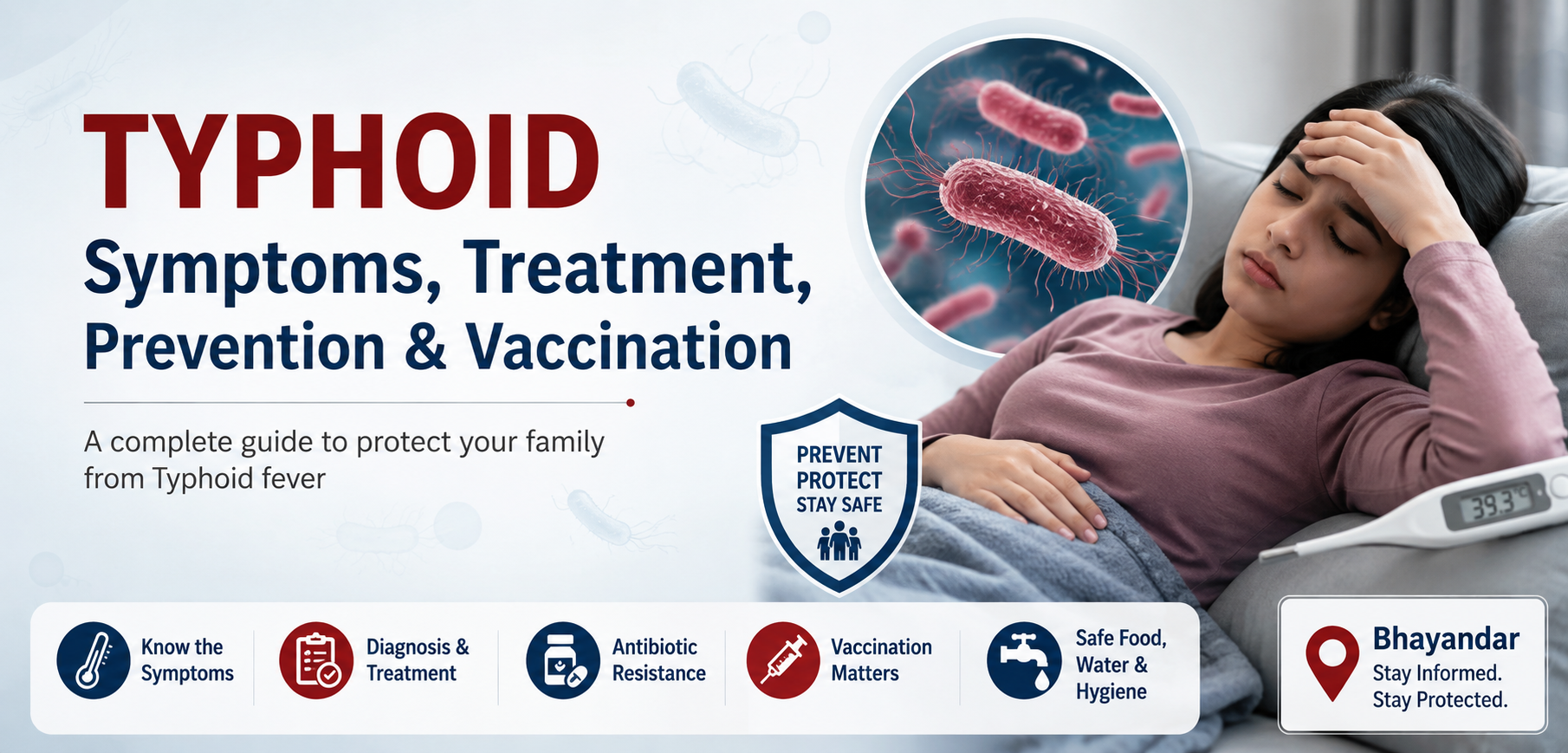
Typhoid in Bhayandar: Prevention, Symptoms, and Treatment
Typhoid fever is a bacterial infection that can cause prolonged fever, weakness, abdominal symptoms, and potentially serious complications if it is not diagnosed and treated appropriately. It is caused by Salmonella Typhi and is usually transmitted when a person consumes food or water contaminated with the bacteria.
For people living in Bhayandar and the wider Mumbai Metropolitan Region, understanding how typhoid spreads, recognizing its symptoms early, and knowing how it is properly diagnosed and treated can help reduce complications and prevent transmission.
Important: Typhoid can resemble dengue, malaria, viral infections, urinary infections, and other causes of prolonged fever. A fever alone does not mean that a person has typhoid. Proper medical evaluation and, where appropriate, laboratory testing are important before starting antibiotics.
What Is Typhoid Fever?
Typhoid fever is a systemic infection caused by *Salmonella enterica* serovar Typhi, commonly called Salmonella Typhi.
Unlike many gastrointestinal infections that remain largely within the digestive tract, Salmonella Typhi can invade the intestinal lining and enter the bloodstream, causing a systemic illness.
The infection is primarily transmitted through the faecal–oral route. This means bacteria from the stool of an infected person can contaminate food or water and subsequently infect another person.
Typhoid is therefore closely associated with:
- Unsafe drinking water
- Poor sanitation
- Contaminated food
- Inadequate hand hygiene
- Contamination by infected food handlers
- Crowded environments where sanitation is difficult to maintain
WHO estimates that there were approximately 9 million cases of typhoid and 110,000 deaths globally in 2019, demonstrating that typhoid remains an important public-health problem.
Why Typhoid Can Be Difficult to Recognize
One of the biggest challenges with typhoid is that its early symptoms are not specific.
A person may initially experience fever, tiredness, headache, reduced appetite, nausea, or abdominal discomfort. These symptoms can occur with many other infections commonly seen in India.
Typhoid should therefore not be diagnosed solely because someone has:
- A high fever
- Weakness
- Abdominal pain
- A positive screening test
- A history of eating outside
A doctor may need to consider the person’s symptoms, examination findings, duration of fever, local epidemiology, previous antibiotic exposure, and laboratory results.
Symptoms of Typhoid
Symptoms commonly develop after an incubation period of approximately 6–30 days, although the timing can vary.
Common symptoms include:
1. Persistent Fever
Fever is one of the most characteristic symptoms.
It may start gradually and become persistent or increasingly high over several days.
A prolonged fever without an obvious explanation should be medically evaluated rather than treated repeatedly with over-the-counter medicines alone.
2. Headache
Headache and a general feeling of being unwell are common.
3. Marked Weakness and Fatigue
Typhoid can cause significant exhaustion and reduced ability to perform normal daily activities.
4. Loss of Appetite
Reduced appetite is common and may contribute to weight loss and weakness during illness.
5. Abdominal Pain or Discomfort
Some patients develop abdominal pain, cramps, bloating, or discomfort.
6. Constipation or Diarrhoea
Bowel changes vary between patients.
Constipation may occur, particularly in adults, while diarrhoea can be more prominent in children.
7. Nausea or Vomiting
Some patients experience nausea and occasionally vomiting.
8. Rash
A small number of patients develop faint, rose-coloured spots, sometimes called “rose spots.”
Their absence does not rule out typhoid.
WHO notes that prolonged fever, fatigue, headache, nausea, abdominal pain, constipation or diarrhoea are among the principal symptoms of typhoid.
When Fever Should Not Be Ignored
Seek medical assessment if fever is:
- Persistent or repeatedly returning
- Associated with significant weakness
- Accompanied by abdominal pain
- Associated with persistent vomiting or diarrhoea
- Associated with dehydration
- Getting worse instead of better
- Occurring after a known exposure to potentially contaminated food or water
Do not assume that every prolonged fever in Bhayandar is typhoid. Dengue, malaria, leptospirosis, COVID-19, urinary infections, pneumonia and other illnesses can produce overlapping symptoms.
This distinction matters because treatment differs significantly between these conditions.
How Is Typhoid Diagnosed?
Diagnosis should be based on clinical assessment combined with appropriate laboratory testing.
Blood Culture
Blood culture is an important test for confirming typhoid fever, particularly when performed before antibiotics are started.
A positive culture can identify Salmonella Typhi and, importantly, allow the laboratory to determine which antibiotics are likely to be effective.
The Indian Ministry of Health and Family Welfare’s treatment guidance describes a confirmed case as one with compatible fever and laboratory confirmation through culture, including blood culture.
Why Antibiotic Sensitivity Testing Matters
Antibiotic resistance has become a major problem in typhoid.
Salmonella Typhi strains resistant to commonly used antibiotics have emerged in many parts of the world. WHO specifically identifies increasing antimicrobial resistance as a major reason why typhoid treatment has become more complicated.
When a bacterial culture is available, antimicrobial susceptibility testing can help doctors select an appropriate antibiotic.
Important About Testing
What About the Widal Test?
The Widal test is widely known in India, but it has important limitations.
A Widal result by itself should not automatically be treated as proof that a person currently has typhoid. Interpretation can be affected by previous infection, vaccination, background antibody levels and timing of the illness.
This is one reason a doctor may recommend culture-based testing or other investigations rather than relying on a single Widal result.
Typhoid Treatment
Typhoid is treatable, but appropriate treatment depends on the individual patient and the antibiotic-resistance pattern.
Do Not Self-Prescribe Antibiotics
Antibiotics Should Be Prescribed by a Doctor
Typhoid requires antibiotic treatment when bacterial infection is diagnosed or strongly suspected by a qualified clinician.
The specific antibiotic should be selected according to factors such as:
- Local resistance patterns
- Culture and susceptibility results when available
- Severity of illness
- Age
- Pregnancy status
- Other medical conditions
- Previous antibiotic exposure
- Ability to take oral medication
Because resistance patterns change, there is no universally appropriate antibiotic that should be recommended for everyone with suspected typhoid.
Do not self-start ciprofloxacin, azithromycin, cefixime, ceftriaxone or another antibiotic simply because you suspect typhoid.
WHO reports resistance involving multiple antibiotic classes, including fluoroquinolones, cephalosporins and azithromycin, in different settings.
Complete the Prescribed Course
If a doctor prescribes antibiotics, take them exactly as directed and complete the prescribed course unless your doctor changes the treatment.
Stopping treatment early because the fever improves can contribute to treatment failure and may increase the risk of ongoing infection.
Hydration and Nutrition
During recovery:
- Drink adequate safe fluids.
- Replace fluids and electrolytes if diarrhoea or vomiting occurs.
- Eat small, easily tolerated meals.
- Gradually return to a normal diet as appetite improves.
- Follow your doctor’s advice if vomiting or severe gastrointestinal symptoms make eating difficult.
Hydration becomes particularly important when fever, diarrhoea or vomiting causes significant fluid loss.
🚨 When Typhoid Needs Urgent Medical Attention
Can Typhoid Become Dangerous?
Yes.
Although many people recover with appropriate treatment, untreated or inadequately treated typhoid can cause serious complications.
Potential complications include:
- Intestinal bleeding
- Intestinal perforation
- Peritonitis
- Encephalopathy or altered mental status
- Severe dehydration
- Sepsis
- Shock
- Other organ complications
The Indian national treatment guidance identifies complications including gastrointestinal bleeding, perforation, peritonitis, myocarditis, pneumonitis and enteric encephalopathy.
Emergency Warning Signs
Go to an emergency department or seek urgent medical care if someone with suspected or diagnosed typhoid develops:
- Severe or worsening abdominal pain
- A rigid or very tender abdomen
- Blood in the stool or black, tarry stool
- Persistent vomiting
- Severe dehydration
- Confusion, unusual drowsiness or altered consciousness
- Difficulty breathing
- Fainting or severe weakness
- Very low blood pressure or signs of shock
- Inability to drink fluids
- Persistent high fever despite treatment
Children, older adults, pregnant patients and people with significant underlying illnesses may require particularly careful assessment.
How Typhoid Spreads in the Community
A person infected with Salmonella Typhi can shed the bacteria in stool.
If proper handwashing and sanitation are not maintained, the bacteria can reach:
Toilet → hands → food/water → another person
This is why typhoid prevention is not only about what an individual eats.
It also depends on:
- Safe water systems
- Proper sewage disposal
- Food hygiene
- Handwashing
- Safe food preparation
- Hygiene among food handlers
- Vaccination
Some people can continue shedding Salmonella Typhi even after their symptoms improve. WHO notes that approximately 2–5% of cases may become chronic carriers, highlighting why appropriate follow-up can be important.
Preventing Typhoid in Bhayandar
Prevention starts with safe water, food hygiene, sanitation and vaccination.
1. Drink Safe Water
If you are uncertain about the safety of a water source:
- Use properly treated water.
- Boil water when necessary.
- Use an appropriate water purification method.
- Be cautious with water from questionable sources.
Do not assume that water is safe simply because it looks clear.
2. Be Careful With Ice
Ice can become contaminated if it is made from unsafe water.
When travelling or eating somewhere where water quality is uncertain, avoid ice unless you know it was made from safe water.
3. Wash Your Hands
Wash hands thoroughly with soap and water:
- Before eating
- Before preparing food
- After using the toilet
- After changing a child’s diaper
- After caring for someone with diarrhoea or an intestinal infection
Hand sanitizer may be useful when soap and water are unavailable, but proper handwashing is especially important after toilet use.
4. Eat Food That Is Properly Cooked
Prefer food that is:
- Thoroughly cooked
- Served hot
- Prepared hygienically
- Protected from contamination
Be particularly cautious with foods that have been sitting at room temperature for prolonged periods.
5. Wash Fruits and Vegetables
Wash produce thoroughly using safe water.
When appropriate, peel fruits yourself.
Raw foods can present greater risk when washing water or food-handling hygiene is uncertain.
6. Be Cautious With Street Food Without Blaming All Street Food
Eating outside does not automatically cause typhoid.
The risk depends on food preparation, water quality, cooking, storage and hygiene.
Instead of focusing solely on whether food is from a restaurant or street vendor, consider whether:
- Food is cooked thoroughly
- Food is served hot
- Raw ingredients are handled safely
- Water appears safe
- Food is protected from flies and contamination
- Hand hygiene is being followed
Typhoid Vaccination
Vaccination is an important component of typhoid prevention.
WHO recommends typhoid conjugate vaccine (TCV) as the preferred typhoid vaccine for routine use because of its immunological advantages and suitability for younger children.
Depending on the vaccine, TCV can be used from 6 months of age, with the upper age range depending on the specific product.
Other typhoid vaccines are also available for specific age groups and circumstances.
However, vaccination does not mean that food and water precautions can be ignored. No typhoid vaccine provides 100% protection.
A paediatrician or qualified doctor can advise whether vaccination is appropriate and which schedule applies.
Typhoid in Children
Children are among the populations at higher risk of typhoid, particularly where exposure to unsafe food, water or sanitation is more likely.
Parents should seek medical advice when a child has persistent fever, particularly when it is accompanied by:
- Poor feeding
- Vomiting
- Diarrhoea
- Abdominal pain
- Increasing sleepiness
- Reduced urine output
- Signs of dehydration
- Significant weakness
Children can deteriorate more quickly from dehydration and serious infection, so prolonged fever should not be managed solely with home remedies.
Typhoid and Antibiotic Resistance
One of the most important modern challenges in treating typhoid is antimicrobial resistance.
A resistant strain may not respond to antibiotics that previously worked well.
This is why people should not:
- Buy antibiotics without medical advice
- Reuse leftover antibiotics
- Share antibiotics with family members
- Stop antibiotics once they feel better
- Assume the same antibiotic that helped someone else will work for them
WHO identifies antimicrobial resistance as a major global health threat and emphasizes that misuse and overuse of antibiotics contribute to resistance.
Responsible antibiotic use protects both the individual patient and the wider community.
If You Have Typhoid: Protect Your Family
If you have been diagnosed with typhoid:
1. Take your prescribed treatment exactly as directed. 2. Wash your hands thoroughly after using the toilet. 3. Do not prepare or serve food for other people while your healthcare professional advises that you remain potentially infectious. 4. Keep personal and household hygiene standards high. 5. Follow up with your doctor if symptoms persist or return. 6. Complete any recommended testing or follow-up.
These measures reduce the possibility of transmitting Salmonella Typhi to other people.
Common Typhoid Myths
Myth: Every prolonged fever is typhoid.
Fact: Many infections can cause prolonged fever. Typhoid requires appropriate clinical assessment and, where indicated, laboratory testing.
Myth: A Widal test alone proves typhoid.
Fact: Widal testing has limitations and should not automatically be interpreted as definitive evidence of current typhoid infection.
Myth: Antibiotics can be started whenever typhoid is suspected.
Fact: Antibiotic selection should be guided by a qualified clinician because antibiotic resistance is an important concern.
Myth: Once the fever disappears, the infection is definitely gone.
Fact: Symptoms can improve while bacteria may still be present. Follow-up should be guided by the treating clinician.
Myth: Typhoid vaccination means you can drink unsafe water.
Fact: Vaccination reduces risk but does not eliminate it. Safe food, water and sanitation remain essential.
When Should You See a Doctor?
If you or your child has a persistent fever without a clear explanation, arrange a medical evaluation rather than repeatedly treating the fever at home.
Prompt assessment is particularly important when fever is accompanied by abdominal symptoms, significant weakness, dehydration, persistent vomiting, altered mental status, bleeding, or worsening illness.
The goal is not simply to determine whether the illness is “typhoid.” The goal is to identify the actual cause of the fever and start the right treatment as early as possible.
The Key Takeaway
The Bottom Line
Typhoid remains a preventable and treatable infectious disease, but it should not be taken lightly.
For families in Bhayandar, practical prevention comes down to:
- Safe drinking water
- Good hand hygiene
- Properly cooked and safely stored food
- Good sanitation
- Appropriate vaccination
- Early medical evaluation of persistent fever
- Responsible antibiotic use
Most importantly, do not self-diagnose typhoid or self-prescribe antibiotics. Persistent fever deserves proper medical evaluation because several illnesses can look similar in their early stages.
With appropriate diagnosis, effective antibiotic treatment when indicated, supportive care and good infection-control practices, the risk of serious complications and transmission can be substantially reduced.
Medical disclaimer: This article is for health education and does not replace an examination, diagnosis or treatment plan from a qualified healthcare professional. Antibiotic choice and duration should be determined by the treating clinician, taking into account the patient’s clinical condition and, when available, laboratory susceptibility results.