

Shalom Medical Team
Shalom Hospital
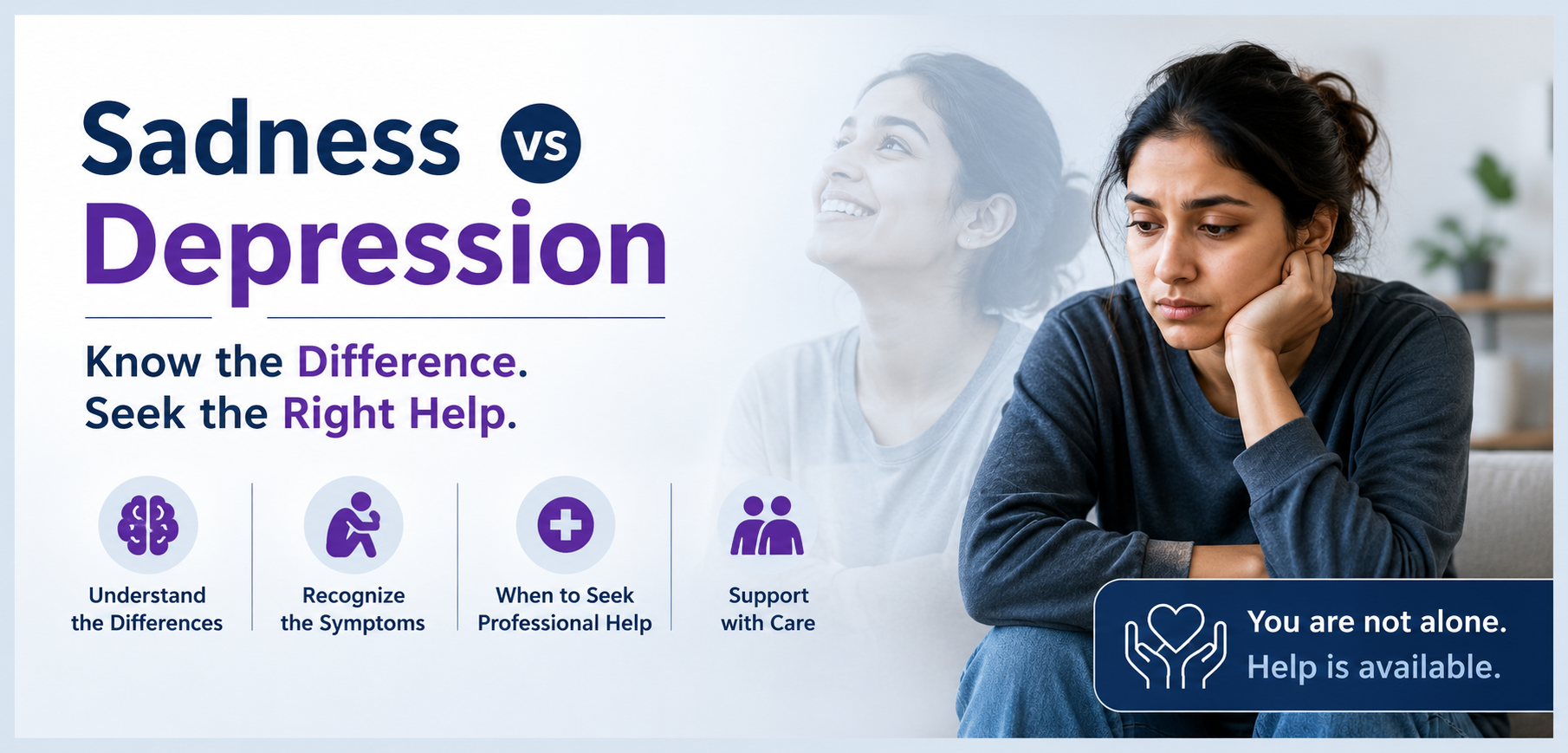
The Short Version
Feeling sad is a normal part of being human. We can feel sad after losing someone we love, experiencing a relationship problem, facing financial stress, failing an exam, losing a job, or simply having a difficult day.
But depression is different.
Depression is a medical mental health condition that can affect mood, thinking, sleep, appetite, energy, relationships, work, and the ability to manage everyday responsibilities. It is not simply a stronger version of sadness, and it is not a sign of personal weakness.
Understanding the difference matters because someone experiencing depression may need professional assessment and treatment rather than simply being told to “cheer up” or “think positively.”
What Is Sadness?
Sadness is a normal emotional response to difficult or disappointing experiences.
It may occur after:
- The death of someone close
- A breakup or relationship conflict
- Financial difficulties
- Problems at work or school
- Rejection or disappointment
- Illness or injury
- Major changes in life
- Conflict with family or friends
Sadness can be painful, but it generally changes over time. A person may still experience moments of happiness, enjoyment, connection, or relief even while feeling sad.
For example, someone grieving a loss may feel deeply sad when thinking about the person they lost but still enjoy a meal with family, laugh at a memory, or look forward to seeing a friend.
Sadness does not automatically mean that someone has depression.
What Is Depression?
Depression, clinically referred to as a depressive disorder, is a mental health condition characterized by persistent depressed mood or a loss of interest or pleasure in activities.
According to the World Health Organization, a depressive episode generally involves symptoms occurring for most of the day, nearly every day, for at least two weeks. The symptoms can also significantly affect daily functioning.
Depression can affect anyone, regardless of age, sex, socioeconomic status, education, or background. Biological, psychological, and social factors can all contribute to its development.
Importantly, a person does not necessarily have to describe themselves as “sad” to be depressed.
Some people primarily experience:
- Emotional numbness
- Irritability
- Loss of interest
- Exhaustion
- Difficulty concentrating
- Feelings of worthlessness
- Withdrawal from other people
- Physical complaints
- Hopelessness
Children and adolescents may also show irritability rather than obvious sadness.
Depression vs Sadness: The Key Differences
| FeatureSadnessDepression | ||
|---|---|---|
| Typical cause | Often follows a specific event or situation | May occur after an event or without an obvious trigger |
| Duration | Usually improves with time | Often persists for weeks or longer |
| Mood | Sadness may come and go | Low mood, emptiness, or irritability can persist |
| Enjoyment | A person can usually still enjoy some things | Interest or pleasure may be significantly reduced |
| Daily functioning | Usually remains relatively intact | Work, school, relationships, self-care, or responsibilities may suffer |
| Sleep | May temporarily change | Persistent insomnia or excessive sleep can occur |
| Energy | Usually returns as the person recovers | Significant fatigue or low energy is common |
| Self-esteem | Usually remains relatively stable | Guilt, worthlessness, or helplessness may develop |
| Future outlook | Hope generally remains | Hopelessness or pessimism may become prominent |
| Treatment | Often improves with time, support, and coping | May require professional assessment and treatment |
This distinction is not about how “bad” the sadness feels. Rather, clinicians consider the pattern, duration, number of symptoms, severity, and effect on functioning when evaluating depression.
1. Duration Matters — But It Is Not the Only Factor
One of the most useful warning signs is persistence.
A difficult event may cause sadness for days or even longer. Grief, in particular, does not follow a simple timetable.
However, persistent symptoms occurring most of the day, nearly every day, for at least two weeks raise concern for a depressive episode.
The two-week timeframe is an important clinical guideline, but it should not be interpreted as:
“If it has been less than two weeks, it cannot be depression.”
Someone with severe or rapidly worsening symptoms should not wait for an arbitrary number of days before asking for help.
2. Loss of Interest Can Be More Important Than Sadness
A major difference between ordinary sadness and depression is anhedonia — a significant loss of interest or pleasure in activities that previously felt enjoyable.
A person with depression might say:
- “I don’t enjoy anything anymore.”
- “I don’t want to meet anyone.”
- “My hobbies don’t interest me.”
- “Even things I used to look forward to feel pointless.”
This loss of pleasure can occur even when there is no obvious reason for it.
Someone who is sad may still experience enjoyment when circumstances improve. Someone experiencing depression may find that enjoyment itself has become difficult to access.
3. Depression Often Affects the Body
Depression is not only an emotional problem.
It can produce physical and cognitive symptoms, including:
- Persistent tiredness or low energy
- Changes in sleep
- Sleeping excessively
- Difficulty falling asleep or staying asleep
- Changes in appetite
- Unintentional weight changes
- Difficulty concentrating
- Problems making decisions
- Feeling physically slowed down or unusually restless
- Unexplained aches and pains
- Headaches or digestive complaints
These symptoms can sometimes be mistaken for a purely physical illness. Certain medical conditions and medications can also produce symptoms that resemble depression, which is one reason professional assessment is important.
4. Depression Can Change the Way a Person Thinks
Depression can affect thinking as well as mood.
A person may begin to believe:
- “I’m worthless.”
- “Nothing will ever improve.”
- “Everything is my fault.”
- “I’m a burden to everyone.”
- “There is no point in trying.”
These thoughts can feel completely convincing to the person experiencing them.
This is one reason simply telling someone with depression to “think positively” is usually not sufficient. Depression can alter concentration, motivation, self-evaluation, and expectations about the future.
5. Depression Can Affect Daily Functioning
Another important distinction is functional impairment.
Ask whether the person’s symptoms are interfering with ordinary life.
For example:
- Are they struggling to get out of bed?
- Have they stopped attending work or school?
- Are they neglecting personal hygiene?
- Are they withdrawing from family and friends?
- Are normal household responsibilities becoming overwhelming?
- Are they unable to concentrate on routine tasks?
- Have previously enjoyable activities disappeared from their life?
Depression can interfere with work, education, relationships, and everyday responsibilities.
Can You Have Depression Without Feeling Sad?
Yes.
This is an important misconception.
Depression does not always look like crying or obvious sadness. Some people experience emotional numbness, irritability, anger, exhaustion, withdrawal, or a profound loss of interest instead.
In particular, depression can present differently across individuals. Men, for example, may sometimes be more likely to present with irritability, anger, physical complaints, substance use, or withdrawal rather than openly describing sadness.
Therefore, “I don’t feel sad” does not automatically rule out depression.
What About Grief?
Grief deserves special consideration.
After the death of someone close, intense sadness, crying, sleep disruption, changes in appetite, difficulty concentrating, and periods of emotional pain can be normal parts of bereavement.
Grief does not follow a fixed schedule.
However, grief and depression can coexist. A person who is grieving may also develop a depressive disorder, particularly when symptoms become persistent, pervasive, significantly impair functioning, or include symptoms such as profound hopelessness, worthlessness, or thoughts of suicide.
A healthcare professional can help distinguish normal grief from a depressive disorder when the situation is unclear.
What Causes Depression?
There is no single cause of depression.
Research indicates that depression can arise through a complex interaction of:
- Genetic factors
- Brain and biological factors
- Psychological factors
- Chronic stress
- Trauma or adverse experiences
- Bereavement and other major losses
- Social isolation
- Certain medical conditions
- Substance use
- Environmental circumstances
Sometimes depression follows an identifiable stressful event. Sometimes it develops without an obvious trigger.
This is another reason depression should not be dismissed with statements such as, “You have nothing to be depressed about.”
A person’s external circumstances do not reliably tell you what is happening internally.
When Should You Seek Professional Help?
Consider speaking with a doctor, psychologist, psychiatrist, or other qualified mental health professional if:
- Low mood or loss of interest persists for two weeks or more
- Symptoms are getting worse
- You are struggling to work, study, socialize, or care for yourself
- Sleep or appetite has changed significantly
- You feel persistently hopeless or worthless
- You are withdrawing from people you normally interact with
- You are experiencing unexplained physical symptoms alongside persistent low mood
- You are using alcohol or drugs to cope
- You are having thoughts about death, self-harm, or suicide
You do not need to wait until symptoms become severe before seeking help. Early assessment can help identify what is happening and what treatment or support may be appropriate.
How Is Depression Diagnosed?
There is no single blood test that can simply confirm depression.
A healthcare professional generally evaluates:
- The symptoms you are experiencing
- How long they have been present
- How frequently they occur
- Their severity
- Their effect on daily life
- Relevant medical history
- Medications and substances
- Other mental health symptoms
- Possible physical causes
Depending on the situation, a clinician may also evaluate for medical conditions that can produce similar symptoms.
Importantly, online questionnaires can help identify symptoms that deserve further assessment, but they do not replace a clinical diagnosis.
Can Depression Be Treated?
Yes. Depression is treatable.
Treatment depends on the type and severity of depression, the person’s circumstances, preferences, age, medical history, and other factors.
Evidence-based treatments can include:
Psychological therapy
Psychological treatments include approaches such as:
- Cognitive behavioural therapy (CBT)
- Behavioural activation
- Interpersonal psychotherapy
- Problem-solving therapy
These treatments can help people understand patterns in their thoughts, behaviours, relationships, and coping strategies.
Medication
Antidepressant medication may be appropriate for some people, particularly when depression is moderate or severe.
Medication decisions should be made with a qualified healthcare professional. Antidepressants are not appropriate for everyone, and treatment needs to take into account potential side effects, other medications, medical conditions, age, and individual circumstances.
For children and adolescents, treatment decisions require particular care. WHO notes that antidepressants are not recommended for treating depression in children and are not first-line treatment in adolescents.
Lifestyle and social support
Healthy routines can support recovery and overall mental health.
Helpful measures may include:
- Maintaining regular sleep and eating patterns
- Staying physically active
- Remaining connected with supportive people
- Continuing manageable activities where possible
- Avoiding excessive alcohol or recreational drugs
- Talking openly with someone you trust
- Seeking professional care when symptoms persist
These measures can support treatment, but they should not be presented as a substitute for professional care when someone has significant depression.
How Can You Help Someone Who May Be Depressed?
If you are concerned about someone, you do not need to diagnose them.
Instead:
Listen. Give them an opportunity to talk without immediately trying to solve the problem.
Take them seriously. Avoid statements such as “Everyone feels that way” or “You just need to be stronger.”
Encourage professional help. Offer to help them arrange an appointment if necessary.
Stay connected. Depression can cause people to isolate themselves, so continued contact can be valuable.
Ask directly about safety when appropriate. If someone says they feel hopeless, worthless, or that others would be better off without them, asking whether they are thinking about suicide does not mean you are putting the idea into their head. It can open an important conversation about safety.
If someone appears to be in immediate danger or has seriously harmed themselves, seek emergency medical assistance immediately.
When Sadness Should Not Be Ignored
When Sadness Should Not Be Ignored
Not every episode of sadness is depression, but that does not mean sadness should be dismissed.
Emotional distress deserves attention when it becomes difficult to manage, repeatedly interferes with life, or does not improve.
You also do not have to determine on your own whether what you are experiencing is “sadness” or “depression.”
A healthcare professional can help make that distinction.
A Simple Question to Ask Yourself
Instead of asking only:
“Am I sad?”
consider asking:
- How long have I felt this way?
- Am I losing interest in things I normally enjoy?
- Has my sleep changed?
- Has my appetite changed?
- Am I constantly exhausted?
- Can I concentrate normally?
- Am I withdrawing from people?
- Am I struggling to perform normal responsibilities?
- Do I feel hopeless or worthless?
- Am I having thoughts of death or suicide?
The more persistent and widespread these changes become, the more important it is to seek professional assessment.
The Bottom Line
Sadness is an emotion. Depression is a medical mental health condition.
Sadness often follows a difficult experience and can gradually improve as a person adapts, receives support, or circumstances change. Depression can persist, reduce the ability to experience pleasure, affect sleep and appetite, impair concentration and functioning, and produce profound hopelessness or thoughts of death.
Most importantly, depression is not a weakness and not something a person should simply “snap out of.” Effective treatments are available, and seeking help is a sign of taking one’s health seriously.
If you or someone you know is experiencing persistent symptoms of depression, speak with a qualified healthcare professional. If there are thoughts of suicide or immediate danger, seek emergency help without waiting.
Medical Disclaimer
This article is intended for general health education and does not replace an evaluation by a qualified healthcare professional. Depression can present differently from person to person, and symptoms can overlap with other mental or physical health conditions. A clinician should make the diagnosis and recommend appropriate treatment.
Sources
- World Health Organization (WHO): Depression and depressive disorders
- National Institute of Mental Health (NIMH): Depression
- WHO India: Depression
- NHS: Low mood, sadness and depression
- NHS: Symptoms of depression in adults